
A common question we hear at PUPARAZZI Day Spa in Albury, NSW
One of the most common concerns we hear from pet parents during dog grooming appointments is:
"Why is my dog shaking? Are they scared?"
It's an understandable question. Watching your beloved dog tremble can be worrying, especially when they are standing in a new environment, waiting for a grooming appointment, visiting the veterinarian, or meeting unfamiliar people and dogs.
For many owners of smaller breeds such as Toy Poodles, Maltese, Chihuahuas, Cavoodles, and Yorkshire Terriers, those little shakes can seem alarming. Our immediate instinct is often to assume the worst. We imagine fear, anxiety, stress, or even trauma.
But what if the reality is completely different?
What if your dog's trembling isn't necessarily a sign that something is wrong at all?
Let's explore the fascinating science behind why dogs shake and uncover one of the biggest misconceptions in pet care.
Many dog owners have been conditioned to believe that shaking equals fear.
While trembling can certainly occur when a dog is frightened or anxious, it is far from the only explanation. In fact, many healthy, happy dogs shake for reasons that have nothing to do with being scared.
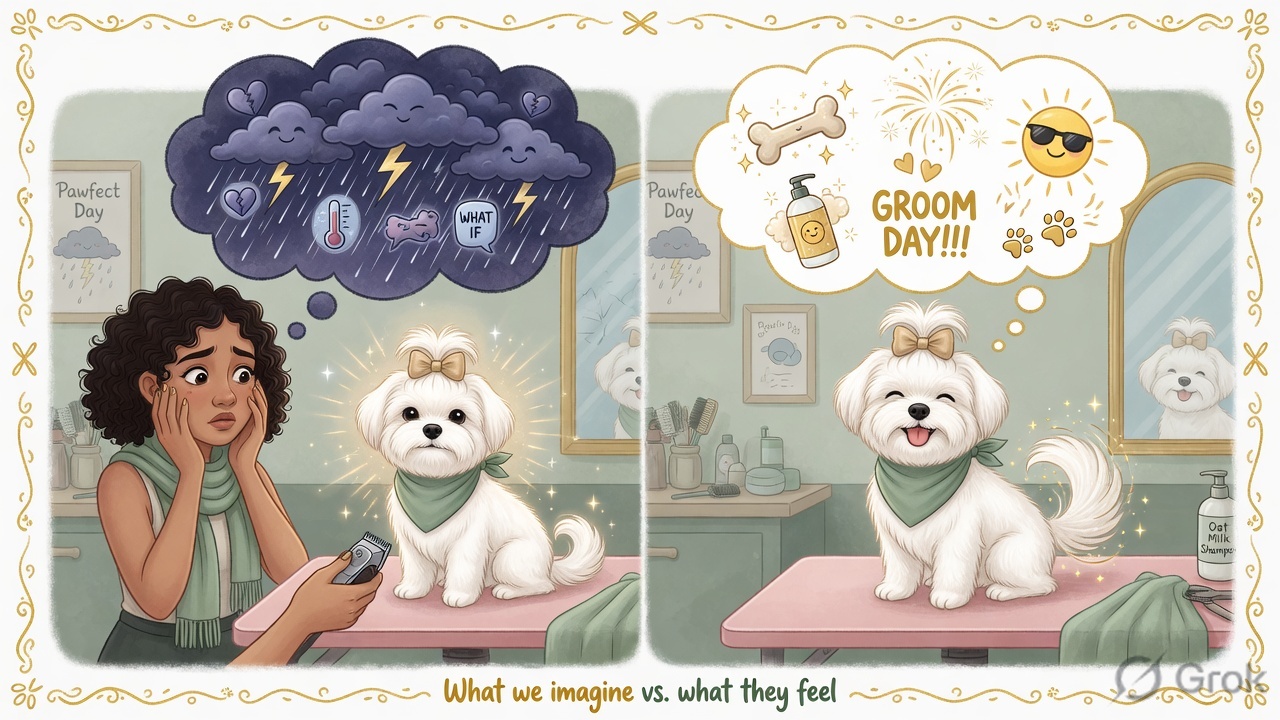
At PUPARAZZI Day Spa, we regularly see small dogs arrive for their grooming appointments vibrating with excitement. Some owners apologise immediately, convinced their dog hates grooming.
Then something interesting happens.
A few minutes later, the same dog is happily interacting with our groomers, accepting cuddles, enjoying the attention, and settling into their regular grooming routine.
So what changed?
Often, the shaking wasn't caused by fear at all. It was caused by anticipation.
Scientists and animal behaviourists often refer to these types of tremors as psychogenic tremors.
While the term sounds complicated, the concept is actually quite simple.
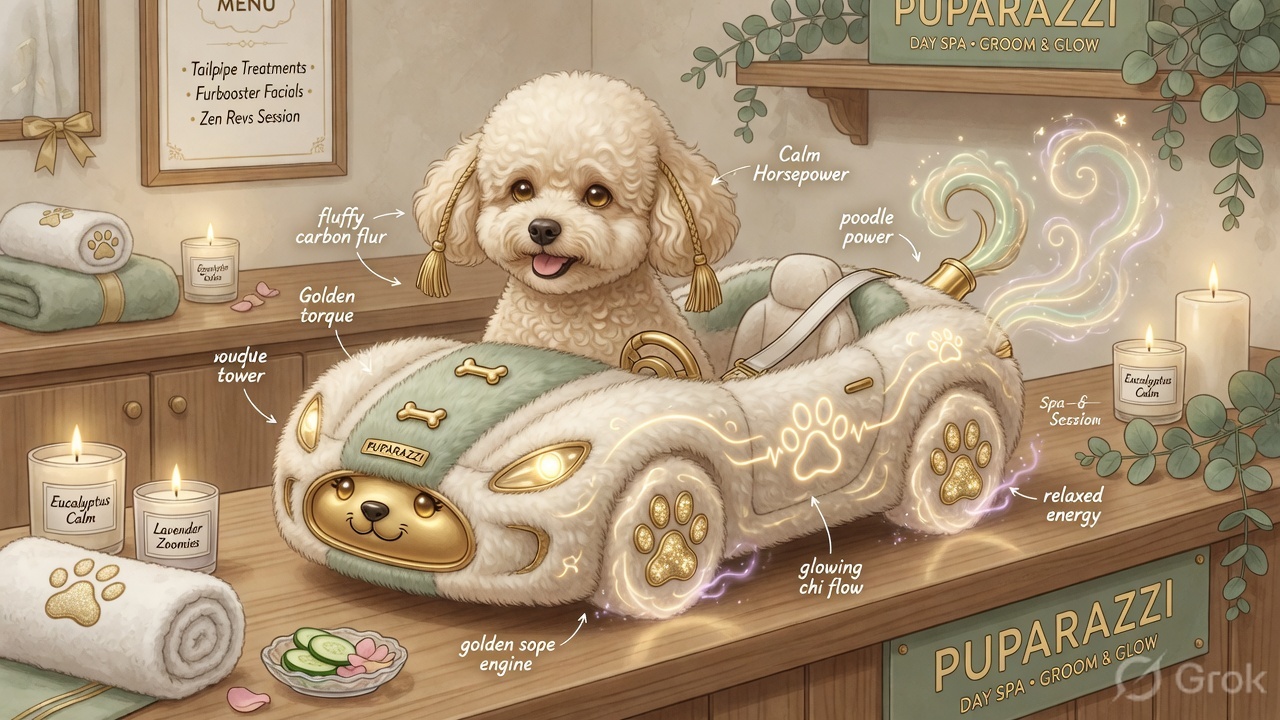
Small breed dogs have incredibly sensitive nervous systems and very fast metabolisms. Think of them as high-performance sports cars compared to larger breeds that operate more like comfortable family SUVs.
Their engines naturally run at higher revolutions.
When these little dogs enter an environment where they expect something significant to happen, their brains can release a surge of adrenaline and cortisol.
This doesn't automatically mean they are afraid.
It simply means their bodies are preparing for action.
Whether that action is a grooming session, a veterinary examination, a walk in the park, or meeting their favourite people, their nervous system responds by gearing up for the event.
The result?
A build-up of energy that manifests as shaking.
If you've ever noticed that Chihuahuas, Toy Poodles, and Maltese seem to shake far more frequently than Labrador Retrievers or Golden Retrievers, you're not imagining it.
Several biological factors contribute to this phenomenon.
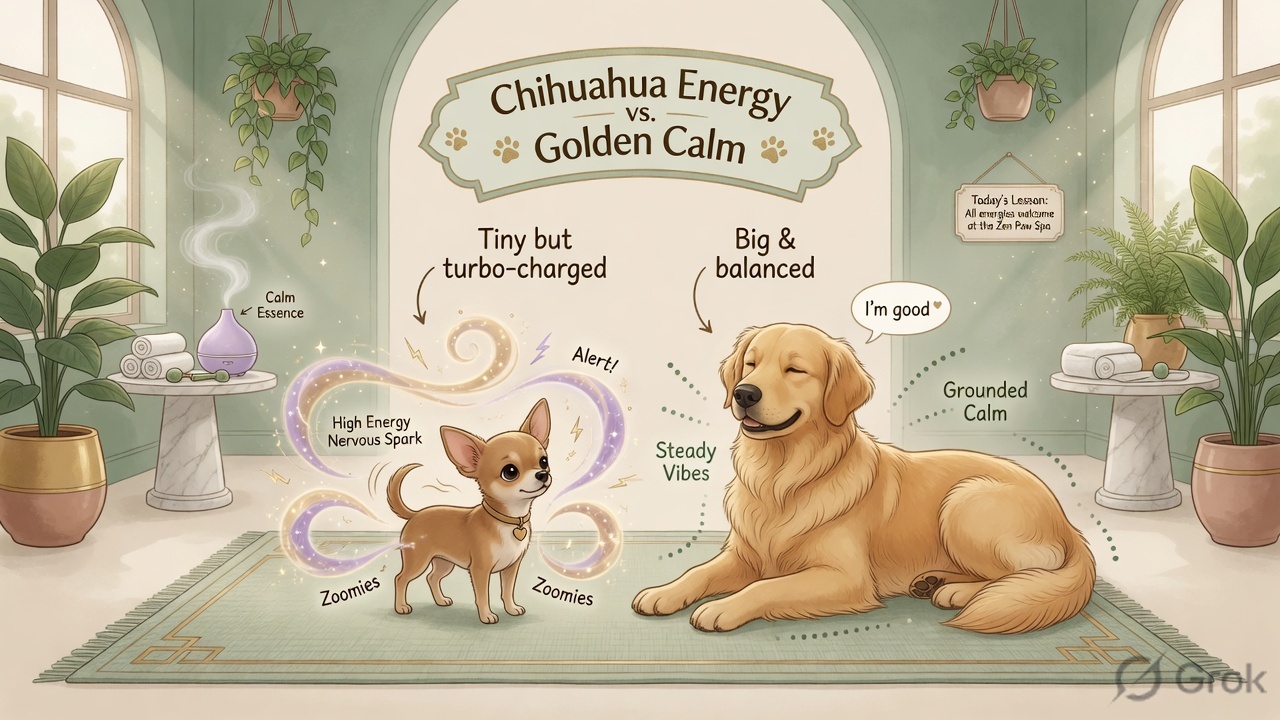
Smaller dogs naturally have faster metabolisms than larger breeds.
Their bodies burn energy more rapidly, and their physiological systems tend to operate at a higher baseline level of activity.
Many toy and companion breeds have highly responsive nervous systems.
They process environmental stimuli quickly and intensely, making them more likely to display visible physical reactions.
When a large burst of adrenaline enters a small dog's body, there is less muscle mass available to absorb and dissipate that energy.
The excess energy often presents as trembling or shivering.
One of the biggest challenges for dog owners is that excitement and nervousness can appear remarkably similar.
Both emotions can trigger elevated heart rates, increased alertness, and physical trembling.
Without understanding the context, it's easy to mistake one for the other.
To better understand what your dog may be experiencing, think about a time when you were preparing for something exciting or important.
Perhaps you were:
Did your stomach flutter?
Did your hands feel shaky?
Did your heart race?

Most people have experienced these sensations at some point.
Importantly, these physical reactions don't necessarily mean we are scared. They simply indicate that our bodies are preparing for something significant.
For many small dogs, the same biological process is occurring.
Their bodies are firing on all cylinders in anticipation of what's about to happen.
At PUPARAZZI Day Spa in Albury, NSW, we often observe a fascinating pattern.
A small dog arrives and begins trembling during check-in.
The owner understandably worries that their dog is frightened.
Yet once the grooming session begins, the trembling gradually disappears.
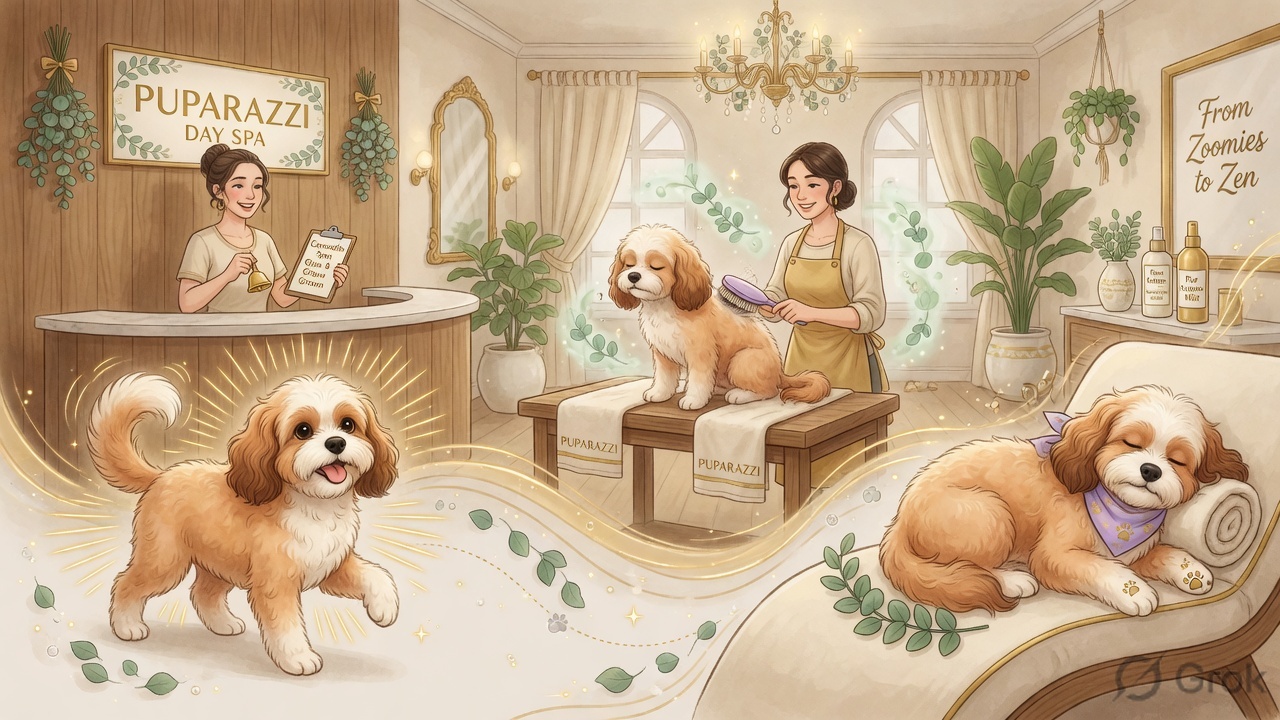
Why?
Because the anticipation phase is over.
The dog has entered a familiar routine.
Their nervous system no longer needs to prepare for the unknown, and the excess adrenaline naturally begins to dissipate.
Once that energy flushes through the body, the shaking often stops entirely.
Many dogs then settle into a calm and predictable grooming experience.
This is one reason why consistency in dog grooming appointments can be so beneficial. Familiar routines help dogs understand what to expect, reducing uncertainty and helping them feel more comfortable over time.
There are many situations where shaking can be a normal physiological response.
These include:
In these situations, shaking is often temporary and resolves naturally once the dog settles into the activity.
Although shaking is frequently harmless, there are times when it can indicate a medical issue.
You should consult your veterinarian if shaking is accompanied by:
Medical conditions ranging from injury and illness to neurological disorders can sometimes cause shaking.
If you are ever unsure, it's always best to seek professional veterinary advice.
If your dog tends to tremble before appointments, there are several things you can do to help them feel comfortable.
Dogs are incredibly skilled at reading human emotions.
If you become anxious every time your dog shakes, they may pick up on that tension.
Maintaining a calm and relaxed attitude can help reassure them.
While it's natural to want to comfort your dog, excessive fussing can sometimes unintentionally reinforce the behaviour.
Instead, offer calm confidence and normal interaction.
Reward your dog with praise, treats, and positive experiences during and after activities they enjoy.
This helps strengthen positive emotional connections.
Consistent dog grooming appointments, walks, feeding schedules, and social interactions help create predictability.
Predictability often reduces stress and increases confidence.
One of the greatest gifts we can give our dogs is understanding.
The more we learn about canine behaviour and biology, the better equipped we are to interpret what our dogs are truly communicating.
A trembling Toy Poodle at a grooming salon isn't necessarily telling you they're terrified.
A shaking Chihuahua in the waiting room isn't automatically signalling trauma.
Sometimes, they're simply experiencing a surge of anticipation, excitement, and nervous energy that their tiny bodies are working hard to process.
Their little engines are revving.
Their systems are preparing.
And in many cases, they're doing exactly what nature designed them to do.
The next time your small dog starts trembling before a grooming appointment, try viewing the situation through a different lens.
Instead of immediately assuming fear, consider the possibility that you're witnessing a perfectly normal biological response.
Their nervous system may simply be preparing for the next part of their day.
At PUPARAZZI Day Spa in Albury, NSW, we believe that understanding canine behaviour is just as important as providing exceptional dog grooming services. Every dog is unique, and recognising the difference between fear and anticipation helps create a more positive experience for both pets and their owners.
So if your little companion arrives looking like a tiny vibrating washing machine, don't panic.
Their sports car engine may simply be warming up for the journey ahead.
