
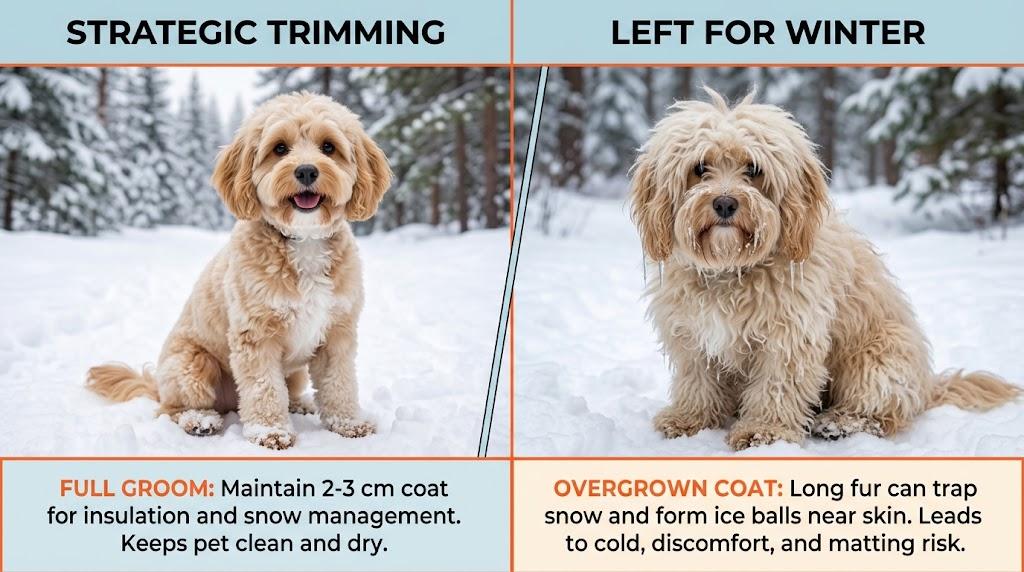
The winter coat paradox doesn't give you license to shave your dog. Understanding the difference between strategic trimming and complete shaving is critical for maintaining your dog's warmth during Albury Wodonga's cold months.
Strategic trimming involves removing excess length and dead coat while preserving the essential insulating layers. This approach maintains the undercoat's ability to trap warm air while preventing moisture accumulation that destroys thermal efficiency. Complete shaving, in contrast, strips away both the protective topcoat and insulating undercoat, leaving your dog genuinely vulnerable to cold temperatures.
If your dog is an inside dog, you can keep them short all year round. This is great for ease of maintanance and care. However, for most double-coated breeds in our region, the ideal winter coat length ranges from 2.5-5cm depending on individual breed requirements. This length allows the undercoat to function properly while preventing the matting issues that plague overgrown coats. A Border Collie might thrive with 4cm of well-maintained coat, while a Golden Retriever could benefit from slightly more length in areas exposed to wind and weather.
Never shave double-coated breeds down to skin during winter. This practice eliminates both insulating layers and can permanently damage coat regrowth patterns, leaving your dog with patchy, ineffective protection for years. Breeds like Huskies, Australian Shepherds, and German Shepherds rely on their dual-layer system, and removing it compromises their natural thermoregulation abilities.
Focus your trimming efforts on high-moisture problem zones. The belly, leg feathering, and paw pads accumulate ice and snow most readily during winter walks. Professional dog grooming in Albury addresses these specific areas, removing excess length where moisture contact is inevitable while preserving insulation on the back, sides, and neck where it matters most.
Pre-winter deshedding treatments make a dramatic difference in your dog's winter warmth. Professional treatments can remove up to 90% of loose undercoat, creating space for dense new growth to fill in for superior insulation. This dead hair removal prevents the compression and matting that destroys air pocket formation.
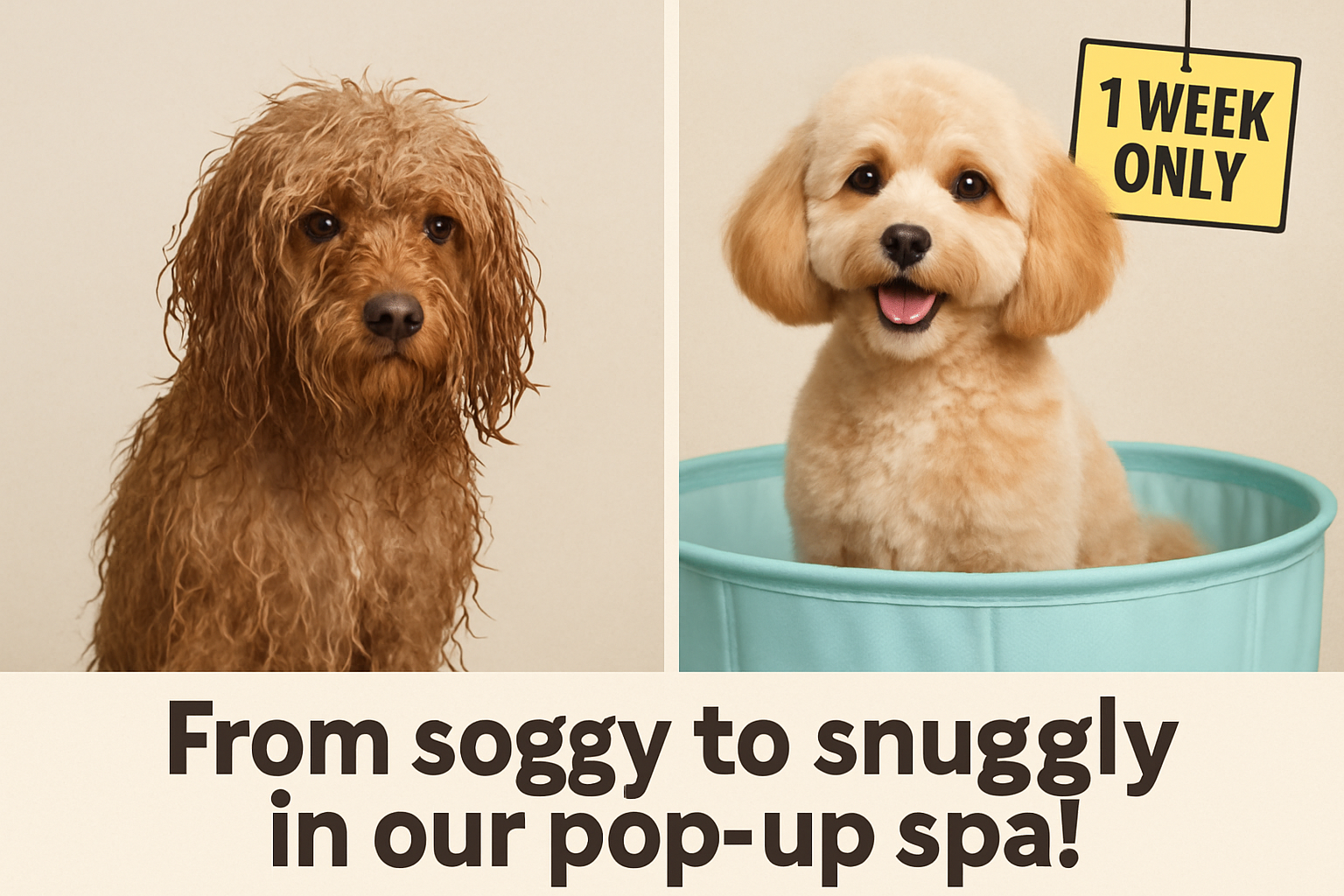
Professional-grade equipment delivers results impossible to achieve at home. The high-velocity dryers used during dog wash services at Puparazzi Day Spa don't just dry the coat. They fluff and separate each hair strand, maximizing the air pocket formation that creates warmth. Home dryers and towel drying compress the coat, reducing its insulating capacity significantly.
The Full Groom service at PUPARAZZI Day Spa combines multiple winter preparation techniques in one comprehensive appointment. Thorough undercoat removal clears away dead hair, hydro-oxy bathing removes dirt and oils that compromise water resistance, and precise scissor styling maintains appropriate length for your dog's breed and lifestyle. This integrated approach optimizes coat structure specifically for winter conditions rather than just making your dog look tidy.
Timing matters for winter coat preparation. Schedule professional grooming 3-4 weeks before peak winter arrives. This window allows the coat to settle into its optimal insulating configuration after the grooming process, giving the undercoat time to fully fluff and reorganize. Last-minute grooming right before cold weather hits doesn't provide this settling period.
Your home maintenance routine directly impacts how well your dog's coat performs in winter. Weekly brushing with appropriate tools prevents the mat formation that destroys insulation. Use a slicker brush for undercoat work and a comb for topcoat maintenance, working systematically through your dog's entire body rather than just the visible outer layer.
Post-walk inspections are non-negotiable during winter months. Remove snow clumps, ice balls, and moisture immediately after coming inside, before they have a chance to mat into the coat. These frozen deposits create cold contact points against the skin and compress surrounding fur, eliminating the air pockets that provide warmth. Five minutes of inspection after each winter walk maintains insulation integrity between professional appointments.
Trimmed paw pads require special attention in winter conditions. Apply dog-safe paw balm before walks to prevent ice accumulation while protecting exposed skin. This simple step reduces the ice ball formation that makes dogs uncomfortable and reluctant to exercise in cold weather.
The Mini-Maintenance service at Puparazzi Day Spa addresses the specific trouble zones where winter moisture causes the most problems. Focused attention on feet, face, and sanitary areas between full grooms keeps these high-contact regions functional without requiring a complete grooming session. This targeted approach is particularly valuable for dogs who spend significant time outdoors during winter.
Persistent shivering despite having a long coat signals a problem with coat function, not coat length. When matting compromises insulation, adding more length only worsens the issue. Dogs shivering under heavy coats often have compressed undercoats that can't trap warm air effectively.
Ice ball formation on legs, belly, or between paw pads is your clearest indicator that these areas need strategic trimming. Excessive length in ground-contact zones creates perfect conditions for snow and ice accumulation. These frozen masses pull heat away from your dog's body and cause significant discomfort during winter activities.
A coat that remains damp hours after coming inside reveals moisture retention problems. Properly functioning winter coats shed water and snow relatively quickly, allowing the undercoat to dry and resume its insulating function. Overgrown fur retains moisture deep within its layers, keeping your dog damp and cold for extended periods.
Visible mats, clumping, or inability to see skin when you part the coat indicates serious dead coat accumulation. This condition requires professional dog wash and removal services to restore warmth. Home brushing alone cannot address the deep undercoat compression that develops when shed hair remains trapped within the topcoat layers. Professional intervention removes this dead material and allows healthy, insulating fur to grow back properly for winter protection.
