
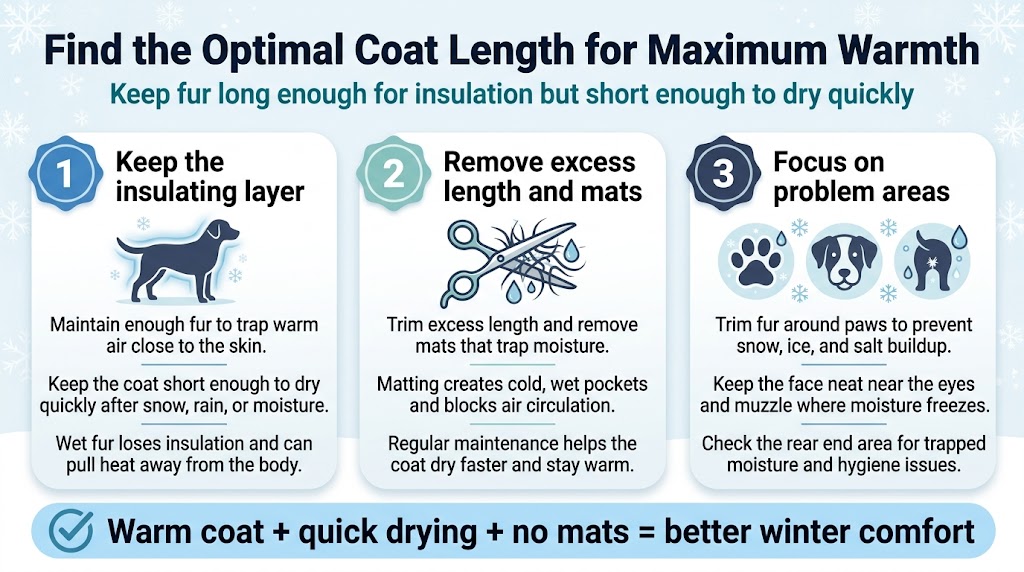
Now that we've covered why excessively long coats can actually make your dog colder, you need to understand the delicate balance of maintaining optimal coat length. Your goal is to preserve enough fur to provide natural insulation while ensuring quick drying times after exposure to snow, rain, or moisture. This sweet spot prevents your dog's coat from becoming a liability in cold weather.
When determining the right length for your dog's winter coat, you should maintain enough fur to create an insulating air layer close to the skin. However, you must avoid keeping it so long that it retains moisture for extended periods. Wet fur loses its insulating properties and can actually conduct heat away from your dog's body, making them significantly colder than if they had a shorter, dry coat.
Your next priority should be eliminating any excess length and existing mats that can trap moisture against your dog's skin. Matted fur creates pockets where water, snow, and ice can accumulate, turning your dog's natural coat into a cold, wet barrier. These problem areas prevent proper air circulation and trap moisture for hours after exposure to wet conditions.
You should carefully trim away any matted sections and reduce overall length in areas where your dog's coat tends to collect debris or moisture. This proactive grooming approach ensures that your dog's coat can fulfill its natural warming function while maintaining the ability to dry quickly when wet. Regular maintenance of coat length prevents the formation of new mats and keeps the fur's insulating properties intact.
With this in mind, you'll need to pay special attention to specific problem areas that commonly trap moisture and debris. Your dog's paws are particularly vulnerable, as long fur between the toes and around the paw pads can collect snow, ice, and salt from winter surfaces. This trapped material not only makes walking uncomfortable but also keeps these sensitive areas cold and wet.
You should trim the fur around your dog's face, especially near the eyes and muzzle, where moisture from drinking, eating, or breathing can freeze in cold temperatures. The rear end area also requires careful attention, as longer fur in this region can trap moisture and create hygiene issues that compound in cold weather.
By focusing your grooming efforts on these high-risk areas, you'll ensure your dog maintains warmth while preventing the accumulation of moisture and debris that can compromise their comfort during winter activities.
