
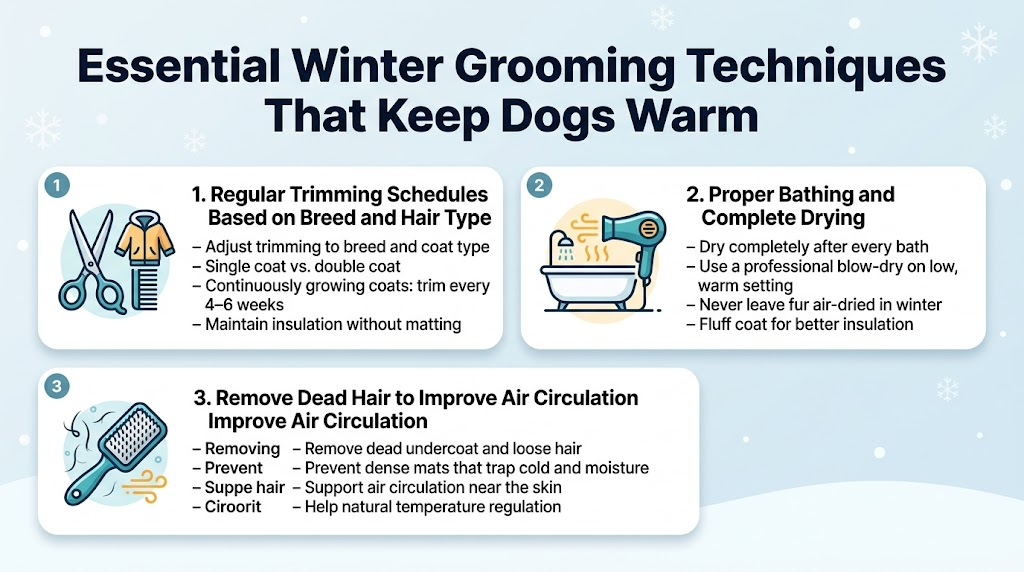
Now that we understand how long coats can actually hinder warmth, implementing regular trimming schedules becomes crucial for your dog's winter comfort. Your trimming schedule should be entirely based on your dog's specific breed characteristics and hair type. Different breeds require different maintenance frequencies to maintain optimal coat length for temperature regulation.
You'll need to assess whether your dog has a single or double coat, as well as the texture and growth rate of their hair. Dogs with continuously growing coats, like Poodles or Yorkshire Terriers, may require trimming every 4-6 weeks, while breeds with seasonal coat changes might need adjustments only at specific times of year. The key is maintaining a coat length that provides insulation without becoming matted or overly dense, which can trap moisture and cold air against your dog's skin.
Previously, many dog owners underestimated the importance of proper drying techniques, but this step is absolutely critical for winter warmth. You must ensure complete drying after every bath your dog receives during the colder months. Moisture trapped in your dog's coat creates a chilling effect that can be dangerous in winter weather.
Professional blow-dry techniques on a low, warm setting are your best approach for thorough drying. This method not only removes all moisture but also helps fluff the coat to create better insulation properties. You should never allow your dog to air-dry completely, especially during winter, as damp fur loses its insulating capabilities and can make your dog significantly colder. The blow-drying process also helps identify any areas where moisture might be hiding, ensuring your dog's entire coat is completely dry before heading outdoors.
With proper drying techniques in place, you'll also need to focus on removing dead hair through regular grooming sessions. Dead hair creates dense mats that actually work against your dog's natural temperature regulation system. These accumulated dead hairs prevent proper air circulation close to your dog's skin, disrupting the natural insulation process that keeps them warm.
Regular removal of this dead undercoat and loose hair allows for improved air circulation, which paradoxically helps maintain better temperature regulation. Your dog's coat works most effectively when air can move freely through it, creating insulating pockets that trap warm air while allowing moisture to escape. By maintaining this balance through consistent dead hair removal, you're supporting your dog's natural ability to stay warm throughout the winter months.
