
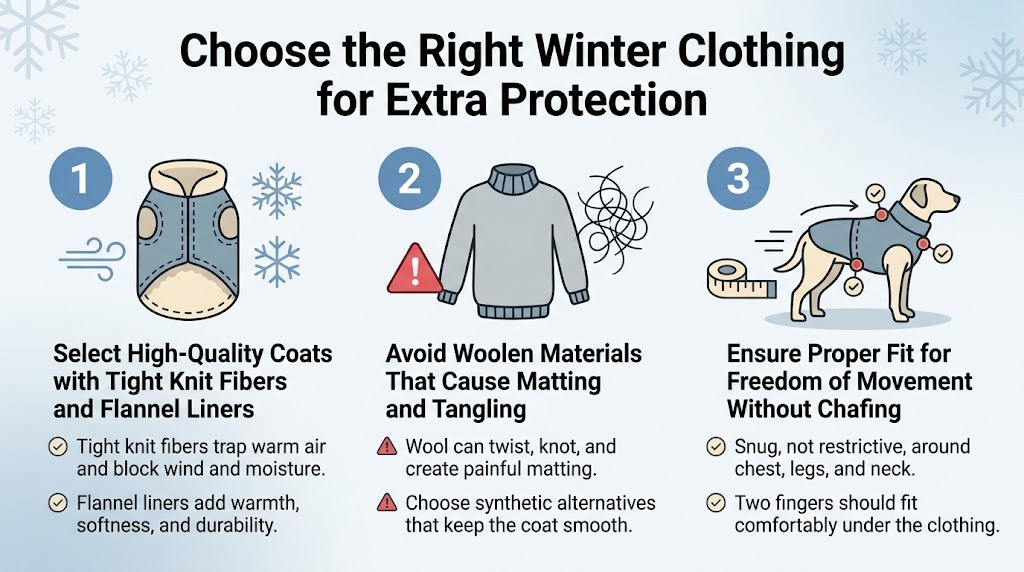
When choosing winter protection for your dog, prioritizing material quality makes all the difference in keeping your pet comfortable during cold Albury-Wodonga winters. You should look for dog sweaters or coats constructed with tight knit fibers, as these materials create superior insulation by trapping warm air close to your dog's body while blocking cold wind and moisture from penetrating through to the skin.
The addition of flannel liners provides an extra layer of warmth that works exceptionally well for dog grooming and maintaining your pet's comfort during outdoor activities. These soft, brushed cotton liners create a cozy barrier against your dog's coat, helping to maintain body heat while remaining gentle against sensitive skin. You'll find that high-quality materials with these features offer better durability and washing performance, ensuring your investment in your dog's winter wardrobe lasts throughout multiple seasons.
While wool might seem like a natural choice for warmth, you should steer clear of woolen materials for your dog's winter clothing. These materials create significant grooming challenges by encouraging your dog's hair to twist and knot, leading to painful matting that can be difficult to remove even with professional dog grooming services.
Woolen fibers have a tendency to catch and pull at your dog's natural coat, creating tangles that become progressively worse with movement and moisture. This not only causes discomfort for your pet but also compromises the effectiveness of their natural insulation system. You'll save yourself time and your dog stress by choosing synthetic alternatives that provide warmth without interfering with their coat's natural texture.
The perfect winter coat means nothing if it doesn't fit your dog properly. You need to ensure that any clothing you select allows complete freedom of movement while preventing matting and avoiding areas where fabric might rub against your dog's skin and cause chafing.
Proper fit means the garment should be snug enough to provide warmth without being restrictive around the chest, legs, or neck areas where your dog moves most frequently. You should be able to slip two fingers comfortably under the clothing at any point, ensuring adequate circulation while maintaining the insulating properties. Pay special attention to areas where the fabric meets your dog's natural coat, as poorly fitted clothing can create pressure points that lead to matting and discomfort during wear.
